Permanent Gas Connections for Backyard Cooking and Heating
Outdoor Gas Services in Little River for grills, fire pits, and patio heaters that rely on refillable propane tanks
North Strand Gas Piping installs outdoor gas lines for homeowners in Little River who want to eliminate propane tank refills and create permanent fuel connections for grills, fire pits, patio heaters, and outdoor kitchen equipment. When you run out of propane halfway through a cookout, or when you haul a tank to the refill station every few weeks, those interruptions add cost and inconvenience to outdoor entertaining. You need a gas line that delivers fuel on demand and supports the equipment you use most.
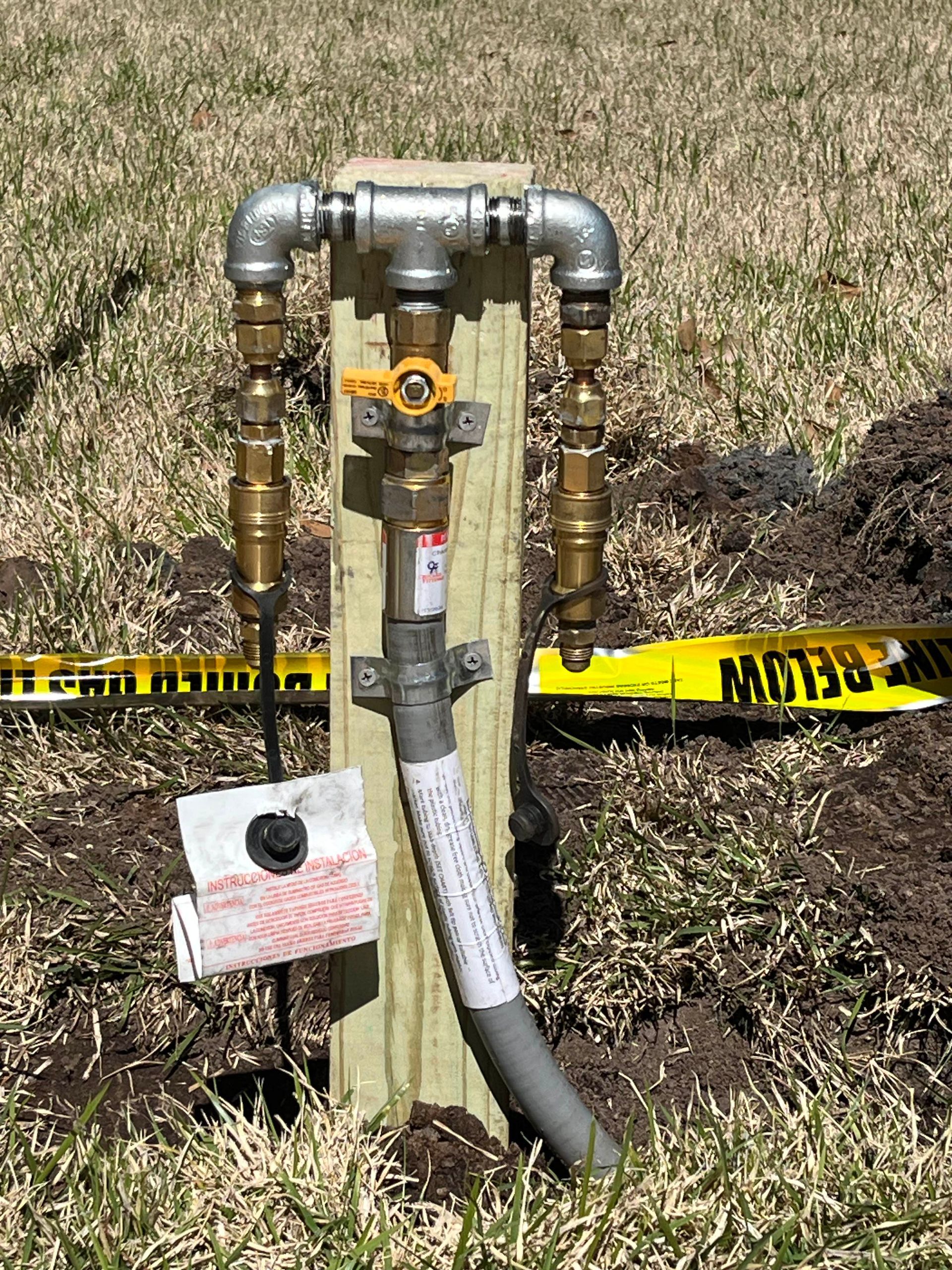
Outdoor gas line installation involves routing weather-resistant pipe from your home's gas system to the cooking or heating appliance location, installing shutoff valves at each connection point, and pressure testing the line to confirm it holds without leaks. Technicians use black iron pipe or CSST designed for outdoor exposure, bury underground sections at the required depth, and seal all penetrations where pipe enters walls or passes through exterior surfaces. Coastal conditions in Little River make corrosion resistance and proper drainage important during installation.
If you are planning an outdoor kitchen, fire feature, or patio heater installation, reach out to discuss gas line routing and connection requirements.
What Outdoor Gas Line Installation Involves
You will see technicians measure the distance from the gas meter to the outdoor appliance location, calculate the required pipe size based on BTU demand, and mark where the line will run underground or along exterior walls. Underground installations require trenching to the depth specified by local code, placing pipe in sand bedding, and backfilling carefully to avoid damage. After the line is installed, you will notice your grill lights immediately when you turn it on, the fire pit flame height adjusts smoothly with the control valve, and you never interrupt a gathering to swap out a propane tank.
Outdoor installations often include quick-connect fittings for portable heaters, multiple shutoff valves to isolate sections of the system, and drip legs to catch moisture or debris before it reaches appliance controls. North Strand Gas Piping installs gas lines for poolside fire bowls, built-in grills, standalone patio heaters, and outdoor pizza ovens. The work includes securing pipe to walls or structures with appropriate hangers, sealing all fittings with pipe thread sealant rated for natural gas, and testing the system under pressure before connecting appliances.
This service does not include appliance installation, landscaping restoration, or electrical wiring for lighting or blowers unless specifically arranged in advance. Homeowners planning extensive outdoor kitchens benefit from early coordination to route gas lines before hardscaping or paving work begins.
Questions Homeowners Have About Outdoor Gas Lines
Homeowners often ask about pipe materials, installation depth, and whether natural gas performs as well as propane for outdoor cooking before committing to a permanent gas line.
What type of gas pipe is used for outdoor installations?
Technicians typically install black iron pipe for above-ground runs and CSST or coated steel for underground sections, and all materials resist corrosion from soil contact and weather exposure.
How deep does an underground gas line need to be buried?
Most local codes require a minimum burial depth of twelve to eighteen inches, but the exact depth depends on whether the pipe runs under landscaping, driveways, or pathways.
When should you install a gas line instead of using propane tanks?
A permanent gas line makes sense when you use outdoor appliances frequently, when propane refills become inconvenient, or when you are building a fixed outdoor kitchen that requires reliable fuel supply.
Why does a grill need a different orifice when converting from propane to natural gas?
Natural gas has lower pressure and different combustion characteristics than propane, so the burner orifice must be larger to deliver the same heat output, and most grill manufacturers provide conversion kits.
What maintenance does an outdoor gas line require in Little River?
Annual inspection of fittings, shutoff valves, and exposed pipe sections helps identify corrosion or loose connections, and keeping vegetation clear of above-ground pipe reduces the risk of damage from landscaping equipment.
If you are ready to stop refilling propane tanks or you want to add a fire pit or outdoor heater to your backyard, contact North Strand Gas Piping to schedule a site evaluation and discuss where the gas line will run.